

Pengutronix Recent Open Source Contributions
Kernel
Linux 6.19 was just released and includes forty new patches from Pengutronix.
Half of these are the result of Marc Kleine-Budde's ongoing maintenance of the CAN subsystem and include regression fixes for memory leaks, error handling, build issues, reset handling, and general cleanup.
On the networking side, a series from our colleague Oleksij Rempel was merged that allows retrieving Mean Square Error (MSE) diagnostics from a PHY via netlink. This can provide a measure of Ethernet link quality on supporting phys.
Oleksij has also been working on power fault handling. In Linux 6.19, his patch for forwarding critical supply events, such as undervoltages, and their resolution, to dependent regulators was merged.
Four device tree changes were applied, including the addition of one new board. For one of Linux Automation GmbH's products, the LXA TAC, we adjusted regulator nodes that led to spurious hangs in v6.10 kernels. Another seven patches went into improving device tree bindings. Furthermore, we added support for another display panel via the panel-simple driver.
For the kernel build system, our colleagues Ahmad Fatoum and Sascha Hauer contributed a new package target that allows kernel modules to be packaged as a CPIO archive. This makes it possible to include them in a FIT image so they are already available when starting to mount filesystems. For more details, see Ahmad's slides and presentation from this year's FOSDEM talk: Netboot without throwing a FIT.
OP-TEE
Pengutronix has continued contributing to OP-TEE, the Open Source OS for the ARM trusted execution environment, that complements Linux (the "rich OS" which runs in the so-called normal world) with applications running in the ARM TrustZone (the secure world).
Since November, Pengutronix has contributed three patches to the OP-TEE client and sixteen to OP-TEE OS.
Michael Tretter has added support for configuring secure boot on Rockchip SoCs from within the normal world.
A lot of work, from our colleague Marco Felsch and others at Pengutronix, went into the imx_ocotp driver for one-time programmable fuses on various i.MX SoCs. This includes various fixes and improvements and most notably, write support for fuses on i.MX6 and i.MX8. These eight patches were finally merged just this week.
Another series contributed by Marco contains improvements on OP-TEE's handling of device trees that ensures that device tree changes performed by OP-TEE actually reach the rich OS.
On the OP-TEE client side, our colleague Holger Assmann has contributed missing pieces to systemd and udev support and Marco has fixed RPMB device permissions via a udev rule.
barebox
During the same period, we've also been busy on our bootloader barebox. Since November, Sascha added about 500 patches to barebox master branch, with a quarter of that being community contributions.
There's been a small November release, a nice December release and, to stay in Sascha's words, an exciting January release. As always more hardware support, improved shell experience and better documentation, but also ongoing progress in security hardening and the EFI loading feature allowing barebox to boot Debian images out of the box. Jonas added support for Signature to the barebox TLV factory data format explained in his FOSDEM lightning talk: Tamper-resistant factory data from the bootloader.
One thing out of the ordinary was that in December, a bunch of fixes have been backported to barebox 2025.09, resulting in the v2025.09.1 stable release, to allow those patches to reach users of the YOCTO whinlatter barebox recipes.
ptxdist
We also keep maintaining our own Linux distribution build system ptxdist, of the almost 300 commits our maintainer Michael Olbrich applied since November, a quarter was contributed from the community.
Monthly ptxdist releases came in steady and we saw the 2025.11.0 major release of the OSELAS Toolchain. For more details, see the announcements on the ptxdist mailing list.
Labgrid
Our embedded testing, development and automation system Labgrid had thirty changesets merged, two thirds of which are community contributions. This includes some smaller bugfixes, stability and usability improvements, support for more hardware and software, better support for multi-place testing. Thanks to the switch to sphinx autoprogram, the manpage and online documentation now lists all of our over forty subcommands including their parameters. Community members contributed support for the pe6216 power distribution unit and restored support for switching two models of USB HUBs. Support for drop-in configuration, another community contribution, was merged. Thank you to Rouven, Jan and Bastian who keep maintaining labgrid, and thank you to all the contributors for sending in your improvements.
RAUC
RAUC, our Robust Auto-Update Controller has seen thirty merges, of which one was a community contribution. In November, there has been the v1.15 release, comprised of half a year of steady work on the update system with many improvements, too many to list them here. See the release notes for what's new.
microcom
Our terminal client microcom has, after two years, seen a new release, 2025.11.0 with some improvements in portability, error handling, and signal handling.
The original microcom that Pengutronix forked in 2006 dates back to around the turn of the century, when Anca and Lucian Jurubita started it based on the robin.c program from the 1998 book "Linux Application Development". Hence, no exciting changes are to be expected from the ongoing maintenance.
Wider Ecosystem
Pengutronix also contributed to various other Open Source projects.
Our colleague Sven Püschel worked on GStreamer. He fixed the v4l2 VYUY mapping and resolved a bug that led to an incompatibility with the current ffmpeg 8.0 releases.
Lucas Stach has continued his work on the Mesa OpenGL and Vulkan library where another five improvements of his to the etnaviv Gallium driver where included. They bring better reliability, a cleaner codebase, a blitting correction, and a command stream optimization.
To the Weston Wayland compositor, Michael Olbrich contributed a fix that resolves rendering issues when the scaling of surfaces changes without a simultaneous change to the surfaces content.
Roland Hieber contributed the composefs package to the Debian project, making it the first Pengutronix-maintained upstream Debian package.
Pengutronix has long contributed to the Yocto and OpenEmbedded ecosystem, and we keep sending patches.
Further Readings

RAUC v1.15 Released
It’s been over half a year since the RAUC v1.14 release, and in that time a number of minor and major improvements have piled up. The most notable change in v1.15 is the newly added support for explicit image types, making handling of image filename extensions way more flexible. Other highlights include improved support for A/B/C updates and several smaller quality improvements. This release also includes the final preparations for upcoming features such as multiple signer support and built-in polling.

Pengutronix 2023: A Year in Review - Part I
Another exciting yet challenging year has passed. We are a year closer to the Y2038 problem, OpenSSL 1.1.1 is finally history, kernel v4.14 from 2017 will finally be discontinued in four weeks, upcoming LTS kernels will only be supported for two years. The relevance of Linux, not just in embedded systems, is soaring. Simultaneously, the European (Open Source) software world faces necessary but challenging transformations, heralded by the upcoming Cyber Resilience Act.
2022 at Pengutronix
At Pengutronix and in the embedded Linux world in general, exciting things happen all year round, but a carry in the date field is a great opportunity to sit back and talk about it. In the broad categories of kernel, open source software, hardware and public relations we want to tell you what happened at Pengutronix in 2022.
Pengutronix Recent Open Source Efforts -
Linux 7.2 Edition
As another kernel version turns stable, we're once again looking back at two months of our efforts to improve Linux and its open source ecosystem.
Pengutronix Recent Open Source Contributions - Linux 7.1 Edition
A tour trough Pengutronix' contributions to Linux 7.1, and to other open source projects
Pengutronix Recent Open Source Contributions - Linux 7.0 Edition
Let's take the Linux 7.0 release as an occasion to look at the Open Source code we've contributed to various upstreams in the last two months.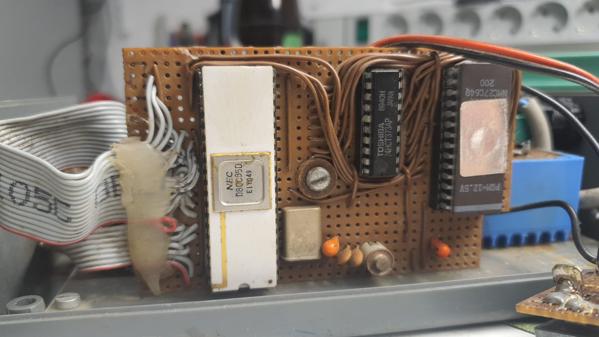
Managing Complexity with Open Source
A few days ago, something exciting happened: I revisited my very first embedded system - a 34 year old stepper motor controller, driving the telescope mount of the Public Observatory Rothwesten, which was built by me back when I was in class 12 in highschool. Comparing those embedded systems from back in the days with the recent industrial systems, it is impressive to see that the latter ones are not manageable any more without the use of open source software.
Pengutronix at the Linux Plumbers Conference
The Linux Plumbers Conference 2024 will take place in Vienna from 18. to 20.09.2024. Luckily this does not overlap with the ELCE. Pengutronix will attend the LPC with six colleagues - so watch out for our T-shirts and hoodies and and feel free to chat with us.
umpf - Git on a New Level
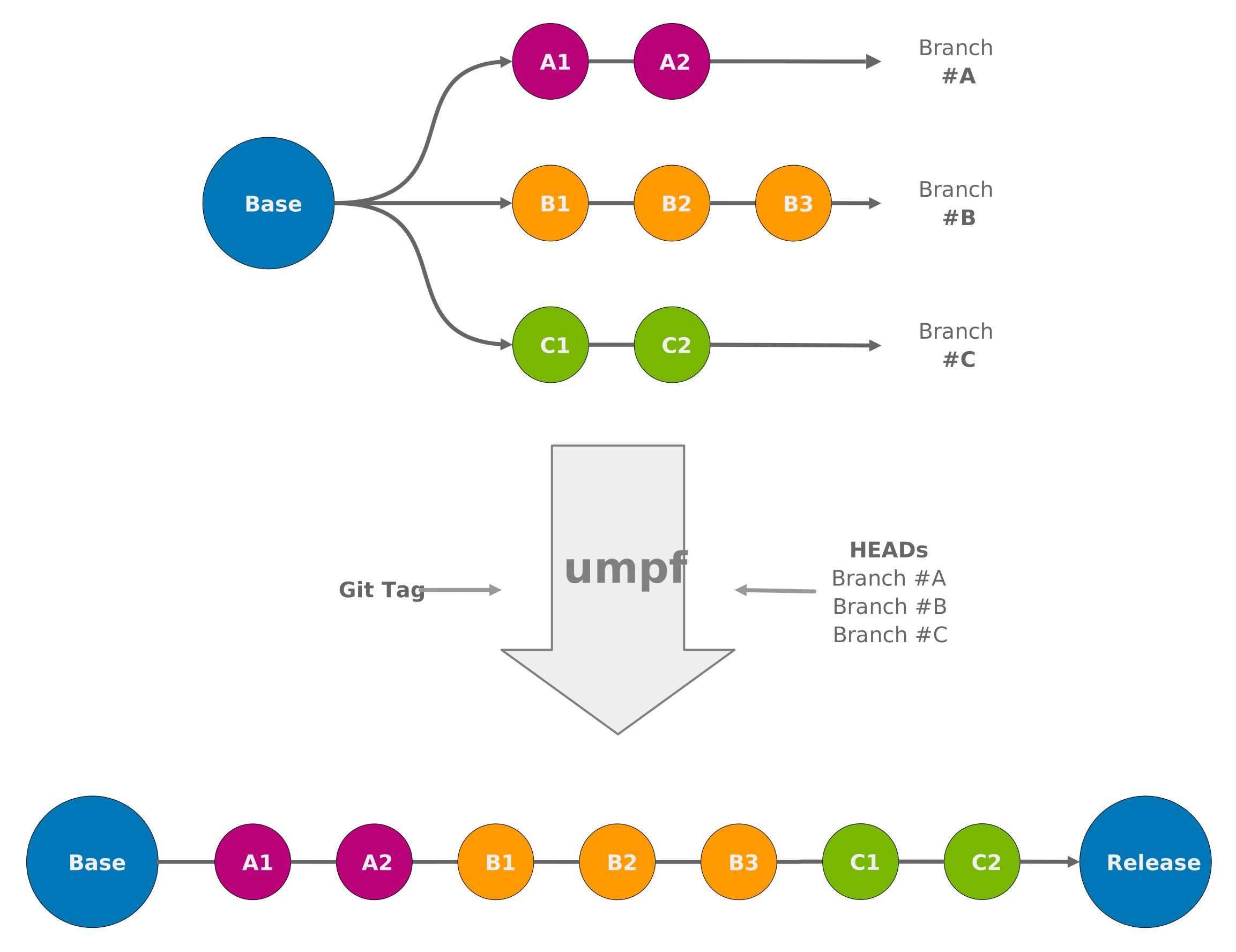
Modern software development is commonly accompanied by a version control system like Git in order to have changes to the source code being documented in a traceable manner. Furthermore, any version state should be easily reproducible at any time. However, for work on complex projects such as the BSP ("Board Support Package") of an embedded system with its multiple development aspects, the simple stacking of the individual changes on top of each other does not scale.
Pulse Width Modulation (PWM) is easy, isn't it? - Turning it off and on again
Part of Uwe Kleine-König's work at Pengutronix is to review PWM (Pulse Width Modulation) drivers. In addition, he also sometimes refactors existing drivers and the Linux kernel PWM subsystem in general.