

Secure Boot on Rockchip RK3588
The Rockchip RK3588 SoC provides hardware features to verify the integrity and legitimacy of firmware running on a device. I presented how to enable Rockchip Secure boot with barebox at the Embedded Recipes conference 2026 in Nice. This blog post goes into more details on how Secure Boot works on the RK3588, how to enable Secure Boot in barebox, and what to take into consideration when integrating it into devices.
Secure Boot and the Cyber Resilience Act
From the Cyber Resilience Act, manufacturers that build devices with digital elements conclude that they have to ensure the authenticity and integrity of the firmware running on the device. Otherwise, attackers may modify the firmware to extract secret information from or deploy ransomware on the users' devices.
Therefore, manufacturers add Secure Boot to the requirements to ensure that their products only execute firmware that has been authorized by them.
The Rockchip RK3588
Lately the Rockchip RK3588 has attracted attention for embedded and industrial Linux use cases. The main reasons are the high performance, especially in multimedia applications, claims about the long-term availability, and the growing upstream support.
Several of our customers chose to evaluate or build devices around Rockchip SoCs.
Secure Boot on RK3588
The RK3588 includes the necessary hardware support for Secure Boot. Before starting an image, the BootROM may verify the signature of a provided firmware against an immutably hardware-persisted public key.
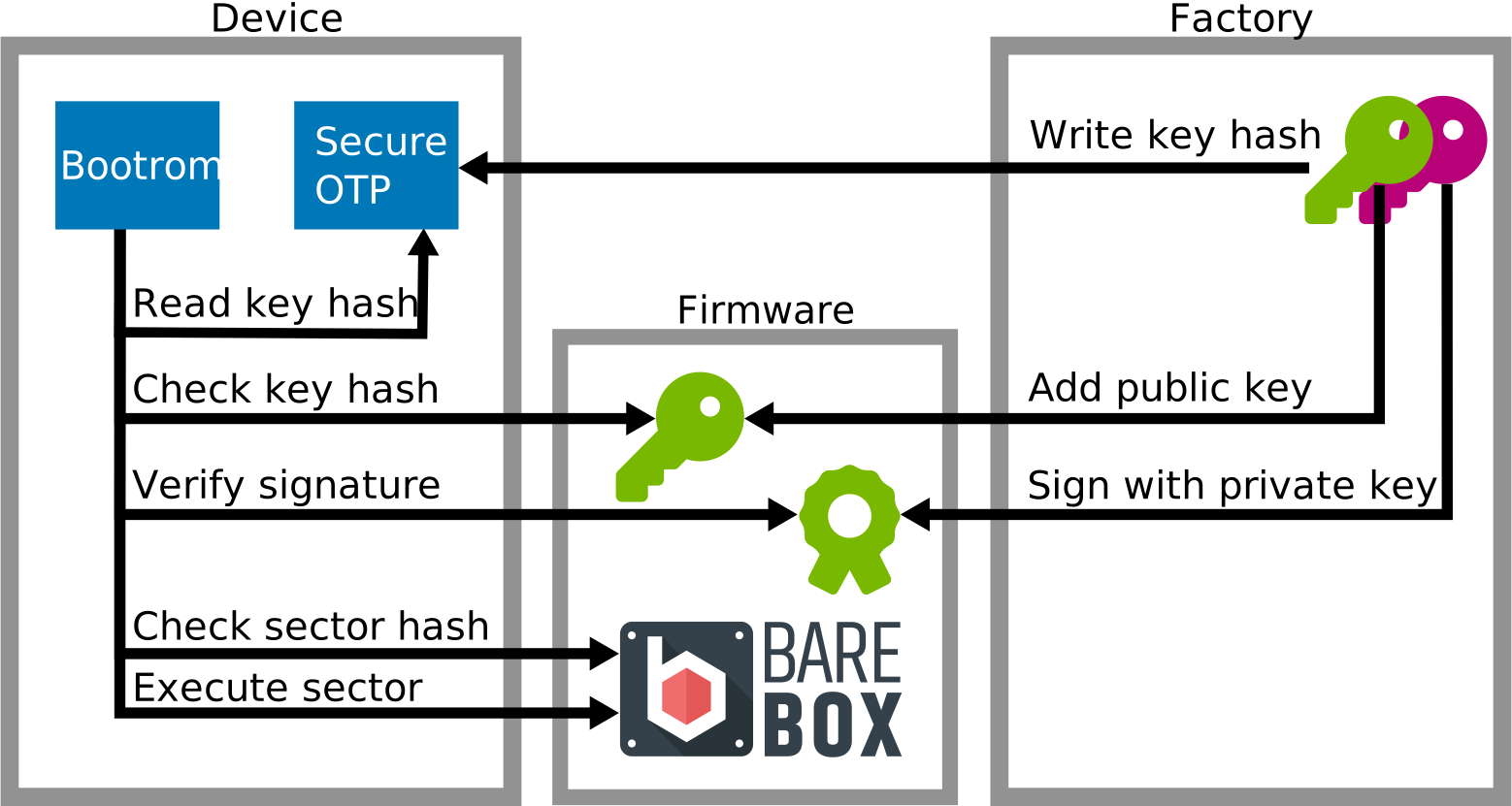
Overview of Secure Boot on Rockchip RK3588. The left side shows the verification of the firmware during the device boot. The right side shows how the device and firmware are linked to the manufacturer's private key.
During system boot, the BootROM verifies the public RSA key in the firmware image against a hash that is stored in OTP eFuses. That key validates the signature of the firmware image header. Because the header contains a hash of the bootloader payload, the bootloader is now trusted and executed. This behavior is hard-coded in the BootROM and cannot be changed.
The build server is responsible for signing the firmware images with the private key of an RSA key pair under the control of the manufacturer. This signature proves that the manufacturer approved this firmware image for execution on their devices.
When the devices are manufactured, the hash of the public key is immutably written into the OTP eFuses of the produced device. This step ensures that the BootROM only accepts firmware that is signed by the manufacturer's private key.
Later chain-of-trust decisions are outside the RK3588 hardware. Device manufacturers may use their preferred verification mechanisms to ensure the authenticity of later stages.
Requirements for Manufacturing Environment
In order to ensure the integrity of this chain-of-trust, device manufacturers must meet several requirements in production.
The private signing key must be kept confidential and accessed only by authorized personnel. If the private key is leaked to unauthorized persons, they may be able to execute modified firmware on the devices. Furthermore, backups of the private key are essential, because without it, releasing further firmware updates is impossible. Therefore, it's advisable to store the key in an HSM (Hardware Security Module).
Manufacturers must ensure the integrity of writing the public key hash into the SoC's OTP eFuses. If that process is compromised, an attacker could write his own key hash and deploy malicious firmware.
Hardware Limitations of the RK3588
Since the root-of-trust is fixed in the BootROM, the RK3588 has several immutable hardware limitations.
The OTP eFuses can store only a single root key hash. Revoking or rotating this signing key is not possible, and images cannot be signed by multiple keys. The signing key is a single point of failure.
The BootROM supports only RSA-2048 and RSA-4096, which may be vulnerable to future quantum attacks.
The Rockchip Downstream Solution
Rockchip published the Rockchip Linux Secure Boot Developer Guide which documents the hardware behavior of Secure Boot on RK3588, and suggests how to implement the chain-of-trust up to Linux.
Since I am convinced that the chain-of-trust implementation after the hardware verification should not be prescribed by the hardware vendor, I will focus on the hardware and BootROM-related tools.
Rockchip provides the binary rk_sign_tool for code signing. As a closed binary, the tool exposes the risk of eventual bit-rot or abandonment. In this case, updating deployed devices becomes difficult.
To my knowledge, the rk_sign_tool lacks support for storing the private key on an HSM, which reduces the security of the key material. As the rk_sign_tool is closed, users cannot add HSM support to it themselves.
In the downstream flow, U-Boot is responsible for writing the public key hash to the OTP. As U-Boot automatically enables secure boot during boot, a manufacturer requires a separate image for enabling Secure Boot. Such an image is outside the usual test cycle and complicates the manufacturing process.
Secure Boot with barebox on RK3588
To address the drawbacks of the downstream solution, we reimplemented Rockchip's Secure Boot tooling and integrated it into more commonly used open source projects. This facilitates the integration into common developer and manufacturing workflows.
The rkimage tool replaces the rk_sign_tool for signing the firmware images. It embeds the public key into the image header and adds the signature. The barebox build system uses rkimage to automatically create signed barebox images. You may also use it to re-sign existing U-Boot images to entirely avoid the rk_sign_tool.
barebox provides the rksecure command to enable Secure Boot and lock devices. This explicit command enables complex factory processes, because it may be called at any stage during the manufacturing process. The same barebox image that is used for manufacturing can be used on locked and unlocked devices and even in development, which simplifies testing and development. However, enabling Secure Boot at runtime requires OP-TEE support via the rk_secure_boot PTA.
Follow the barebox manual to build signed images and lock devices.
Future Work
Currently, barebox supports Rockchip Secure Boot only for RK3588, but the implementation can be extended to other Rockchip SoCs as well. rkimage can sign Rockchip firmware out-of-the-box if the image header is the same as on RK3588.
Writing the public key hash into OTP eFuses requires extending the Rockchip OTP implementation in the OP-TEE OS to support the necessary SoCs.
The signing tools are not integrated into U-Boot, yet. rkimage can re-sign existing U-Boot images, but requires additional steps after the U-Boot build process. One could port the signing code from rkimage to the respective tools in U-Boot.
U-Boot is not able to interact with the rk_secure_boot PTA. One may add a driver for the rk_secure_boot PTA to U-Boot or implement a Linux user space application to have more options to enable Rockchip Secure Boot at runtime.
Conclusion
The Rockchip Secure Boot in barebox differs in details from Rockchip's proposed and documented solution. The barebox implementation focuses on the hardware interaction to provide better flexibility and maintainability. It is important to understand the differences between the approaches used in barebox and proposed by Rockchip when deploying Secure Boot with barebox on a Rockchip SoC.
Further Readings
Pengutronix at the Open Source Firmware Conference 2026
This year's Open Source Firmware Conference took place from September 15th to 17th at Pakhuis de Zwijger in Amsterdam. Marco Felsch and I attended for Pengutronix and had three talks between us:

Bringing Barebox into OE-Core (Yocto)
This blog post chronicles the multi-year journey to get Barebox accepted into OE-Core—from the early attempts to the eventual success in October 2024. Along the way, we’ll explore the technical hurdles we faced, the community discussions that shaped the process, and the improvements we added to both OE and Barebox.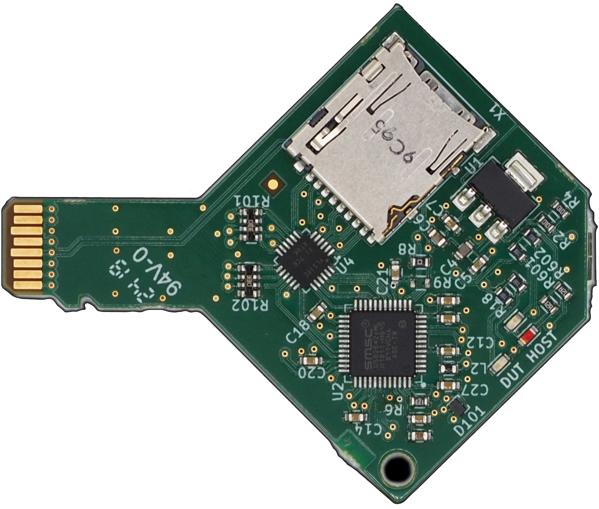
USB-SD-Mux now reads SD Card registers
The USB-SD-Mux is designed to make life easier for embedded software engineers by automating the transfer of an SD card between a host PC (deploying a new software image to the SD card) and an embedded Linux device. Since we have introduced this device into our Embedded Linux development workflow back in 2019 we have probably written thousands of SD card images with it. Now the usbsdmux software controlling the device has gained a new feature: It can now read and decode a few SD card information registers. This makes it possible to gain more insight into the capabilities of the used SD card - especially while developing on low-level software and drivers interfacing with the SD card.
LXA USB-T1L ❤️ Beagle Play: Exploring Single Wire Ethernet
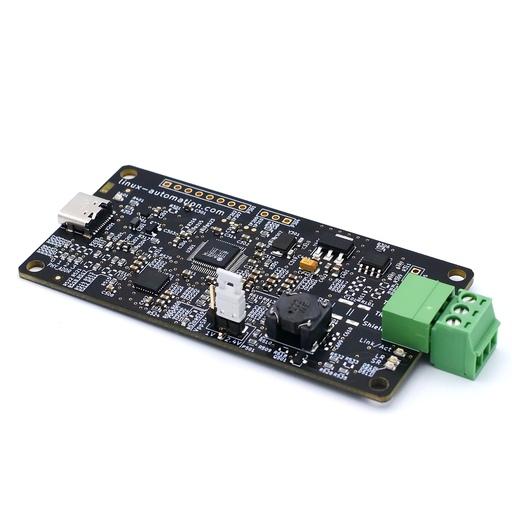
It seems everybody is talking about Single Pair Ethernet (SPE) these days. So we want to follow the trend and do the same :-) SPE is a class of Ethernet transmission standards that uses just a single pair of twisted pair cable for data transmission. There are multiple SPE variants spanning maximum data rates from a hand full MBit/s to multiple GBit/s and cable lengths from a hand full of meters to kilometers. The most interesting ones from our embedded-centric point of view are 10Base-T1L (point-to-point, up to 1 km), 10Base-T1S (multidrop, approx. 10 m) and 100Base-T1 (point-to-point, 15 m). The new Beagle Play comes with a 10Base-T1L PHY. This makes it a great peer to experiment with our Linux Automation USB-T1L. In this post we will explore the possibilities of 10Base-T1L on a recent Linux system.

DSA in Barebox
The v2022.05.0 Release of barebox introduced initial support for the Distributed Switch Architecture (DSA) Framework. DSA is originally a subsystem from the Linux Kernel, which exposes the individual ports of a network switch IC as virtual network interfaces.

Wir haben doch etwas zu verbergen: Schlüssel mit OP-TEE verschlüsseln
Moderne Linux Systeme müssen häufig zwecks Authentifizierung bei einer Cloud- basierten Infrastruktur oder einer On-Premise Maschine eigene kryptografische Schlüssel speichern. Statt der Verwendung eines Trusted Platform Modules (TPM), bieten moderne ARM Prozessoren die TrustZone-Technologie an, auf deren Basis ebenfalls Schlüssel oder andere Geheimnisse gespeichert werden können. Dieses Paper zeigt die Nutzung des Open Portable Trusted Execution Environments (OP- TEE) mit der Standardkonformen PKCS#11 Schnittstellen und i.MX6 Prozessoren von NXP als Beispiel.
Smart City - vom Rapid Prototyping bis zur Tragfähigen Infrastruktur
Wir wollen zum Bundesweiten Digitaltag am 18.6.2021 das Thema "Smarte Städte" ein bisschen von der technischen Seite beleuchten, aber keine Angst: es bleibt für alle verständlich.
Showcase: Embedded off-the-shelf
A firmware upgrade is due. A newly implemented feature needs to be rolled out, a security issue patched or new hardware support added. The software, while capable, is complex. Pengutronix' strategy to handle this complexity is working on a version- controlled Board Support Package (BSP) with continuous updates and tests on the latest mainline Linux kernel.
Using OP-TEE to Authenticate IoT Devices
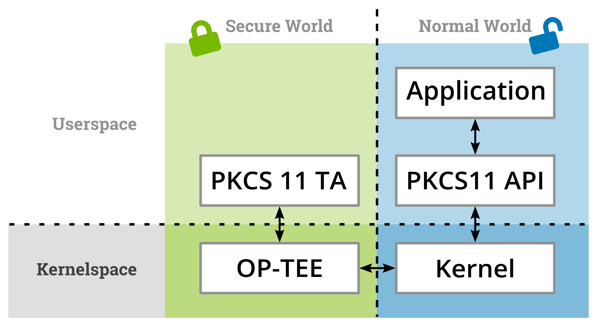
Deploying IoT devices into the field poses the question of how to authenticate these devices against your own services. While software authentication of bootloader, kernel, and filesystems ensures that only trusted software is run on the device, preventing extraction of authentication data from the device requires the use of a Trusted Platform Module (TPM) or equivalent mechanisms. This blog post introduces OP-TEE and PKCS#11 as a software alternative.