

Pengutronix Recent Open Source Contributions - Linux 7.1 Edition
Linux 7.1 is here! This blog post shows what work we've contributed to it and other Open Source Projects in the two months since Linux 7.0.
Kernel
Pengutronix has contributed a total of 45 patches to Linux 7.1 and all of them went to drivers and their documentation.
Michael Tretter has implemented support for reading the firmware version of st1232 touchscreens.
Sascha Hauer has modified the Freescale Layerscape PCIe controller driver so it can be built as a module.
Michael Tretter has resolved a build error in the LED Multicolor interface.
Marco Felsch has introduced support for the EDT ET057023UDBA display panel.
The NXP i.MX6 image processing unit (IPUv3) allows blending two video planes in hardware. One plane, called the "primary plane", spans the whole screen, and the other one, called the "overlay plane", may be smaller and positioned somewhere in the output. Albeit the name, i.MX6 supports blending the "overlay plane" below the primary plane, which makes sense given the primary plane supports transparency. Thanks to Michael Tretter's series drm/imx: ipuv3-plane: support underlay plane, this feature is now supported by the linux kernel.
Another media interface on the i.MX 5 and 6 SoCs is the CSI, the Camera Sensor Interface. In the patch series media: staging: imx: fix multiple video input, Michael resolved an issue that could leave hardware in an inconsistent state when an input stream was started while another one was already running.
In the Industrial IO (iio) subsystem, Oleksij Rempel has contributed support for the DS4402 and DS4404 Digital Analog Converters to the ds4424 driver and provided further improvements and fixes along the way.
Steffen Trumtrar added support for a new display panel and an i.MX8MP board variant that uses it. Fabian Pfitzner added lots of hardware features to the device tree of the FRDM i.MX 8M Plus Development Board.
Jonas Rebmann provided some improvements to the ina2xx power measurement chip driver.
Marco Felsch has worked on the Power Management Domain driver of the i.MX91 and i.MX93 providing general improvements and proper support for subdevices. Subdevices in the context of pmdomain are devices relying on other devices to indirectly power them from the power management controller.
Finally, our colleague Marc Kleine-Budde has contributed eleven patches to the i.MX Low Power SPI (LPSPI) driver. This makes the driver more readable by cleanly following manufacturer specs, removing obselete code, migrating to kernel best practices, and simplifying some constructs.
OP-TEE
Much like in the previous installation of this blog series, we've been working on randomness sources in OP-TEE. OP-TEE is the secure OS complementing the linux kernel with applications running in the trusted execution environment of the ARM CPU. The prime purpose of these applications is asymmetric cryptography, and that needs proper random numbers.
For cryptographic applications these should be provided either by a hardware random number generator (hardware RNG) or by a software RNG seeded by a hardware RNG.
Many hardware platforms which were included in OP-TEE under the assumption that OP-TEE was configured to exclusively rely on hardware RNGs simply omitted the initialization code for software RNGs which lead to an insecure random number source not seeded in hardware if software RNGs were enabled on one of these hardware platforms.
Our colleague Sascha Hauer provided a patch to OP-TEE that would, on affected platforms, make this configuration fail in the build process instead of silently producing an insecure OP-TEE-OS.
candleLight Firmware
Marc Kleine-Budde continued his work on the Firmware for the candleLight USB-CAN-adapter, with a total of 119 commits in 34 pull requests since the last blog post two months ago.
The build-system was improved to feature better compiler detection, that eases builds on Windows and MacOS, a helpful error message if the libc implementation is unsupported, and a helper script for the installation of a supported libc implementation.
CI was updated to include Windows and MacOS and to test with many more toolchain versions.
(De-)initialization code was renovated to resolve issues after suspending or rebooting the USB host during a transfer.
Support for ARM semihosting was introduced to ease debugging of the candleLight.
Furthermore, binary size reduction and countless other improvements and cleanups.
Wider Ecosystem
In Mesa, the Open Source userspace graphic stack, Philipp Zabel has resolved a build warning in the Etnaviv driver.
To the Yocto project, Ahmad Fatoum contributed the barebox update to 2026.04.0, Ulrich Ölmann fixed a typo, and Fabian Pflug backported a patch to allow building pkcs11-provider on 32bit systems.
barebox
barebox has seen close to 400 new non-merge commits of which about 100 where community contributions. 2026.04.0 and 2026.05.0 have been released: Smaller binaries, plenty of hardening, new hardware support, the ability to override any combination of kernel, devicetree and initrd, and much more.
PTXdist
PTXdist 2026.05.0 and 2026.06.0 have been released.
The latter includes some major changes such as enforcement of sha256 checksums for sources of all upstream packages and changes to the SPDX SBoM generation.
In total, our PTXdist maintainer Michael Olbrich has applied 260 patches of which 160 where community contributions.
Labgrid
Labgrid has seen the v25 and v26 releases, take a look at the Changelog to see what's new.
Since the last post, labgrid has merged 16 new pull requests, most of which where community contributions.
RAUC
Into RAUC, we've merged 34 pull requests, most of which where authored by us at Pengutronix. Most of them are on testing, documentation, maintenance and quality improvements.
Further Readings
Pengutronix Recent Open Source Contributions - Linux 7.0 Edition
Let's take the Linux 7.0 release as an occasion to look at the Open Source code we've contributed to various upstreams in the last two months.
Pengutronix Recent Open Source Contributions
Let's take the Linux 6.19 release as an occasion to look at the Open Source code we've contributed to various upstreams in the last three months.
Pengutronix Recent Open Source Efforts -
Linux 7.2 Edition
As another kernel version turns stable, we're once again looking back at two months of our efforts to improve Linux and its open source ecosystem.
Managing Complexity with Open Source
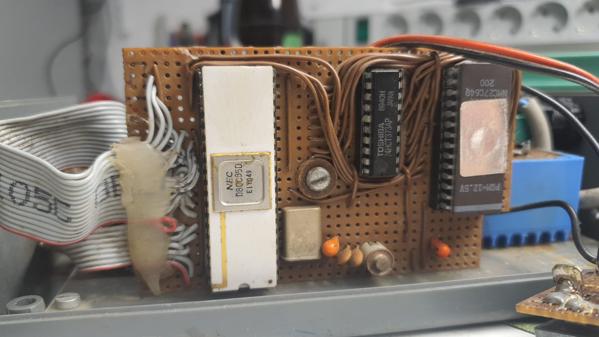
A few days ago, something exciting happened: I revisited my very first embedded system - a 34 year old stepper motor controller, driving the telescope mount of the Public Observatory Rothwesten, which was built by me back when I was in class 12 in highschool. Comparing those embedded systems from back in the days with the recent industrial systems, it is impressive to see that the latter ones are not manageable any more without the use of open source software.

Pengutronix at the Linux Plumbers Conference
The Linux Plumbers Conference 2024 will take place in Vienna from 18. to 20.09.2024. Luckily this does not overlap with the ELCE. Pengutronix will attend the LPC with six colleagues - so watch out for our T-shirts and hoodies and and feel free to chat with us.

Pengutronix at FrOSCon 2024
On August 17th and 18th, 2024, it's that time again: FrOSCon will take place at the Bonn-Rhein-Sieg University of Applied Sciences in Sankt Augustin - and Pengutronix will be there again as a Partner.
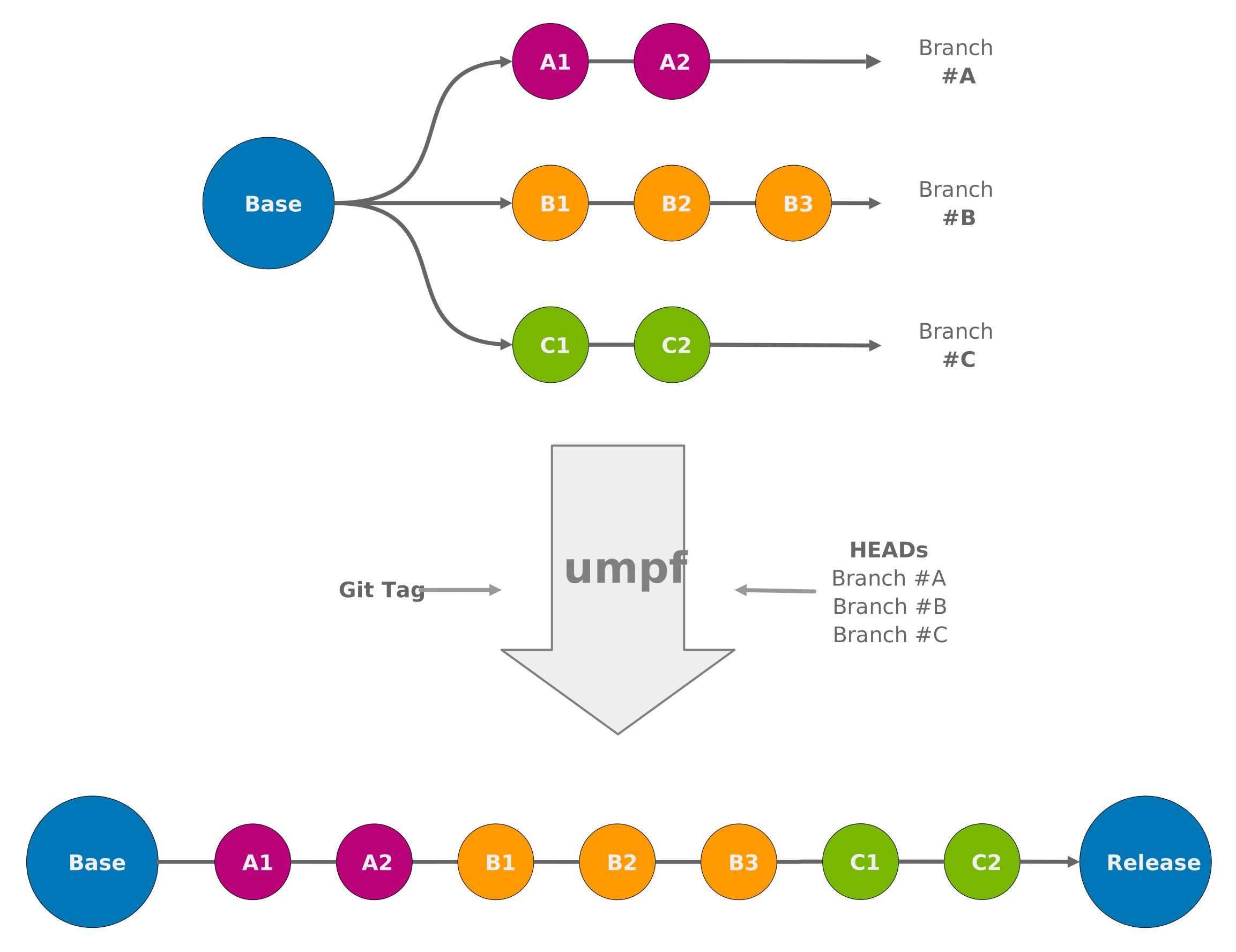
umpf - Git on a New Level
Modern software development is commonly accompanied by a version control system like Git in order to have changes to the source code being documented in a traceable manner. Furthermore, any version state should be easily reproducible at any time. However, for work on complex projects such as the BSP ("Board Support Package") of an embedded system with its multiple development aspects, the simple stacking of the individual changes on top of each other does not scale.
Pulse Width Modulation (PWM) is easy, isn't it? - Turning it off and on again
Part of Uwe Kleine-König's work at Pengutronix is to review PWM (Pulse Width Modulation) drivers. In addition, he also sometimes refactors existing drivers and the Linux kernel PWM subsystem in general.

Pengutronix at Embedded World 2022
Welcome to our booth at the Embedded World 2022 in Nürnberg!

Pengutronix Kernel Contributions in 2021
2022 has started, and although Corona had a huge impact on our workflow, the Pengutronix team again made quite some contributions to the Linux kernel. The last kernel release in 2020 was 5.10, the last one in 2021 was 5.15, so let's have a look at what happened in between.