

Pengutronix Recent Open Source Contributions - Linux 7.0 Edition
Linux 7.0 was just released. Let’s take the opportunity to see what we at Pengutronix have contributed to this release, and to other Open Source projects since the 6.19 post in February.
Kernel
The Linux kernel isn’t exciting, and that’s what we love about it. 7.0 is a release much like any other, and Linus just doesn't have enough toes to count above 19.
At Pengutronix, we have contributed a total of 21 patches to this release, not counting the merges performed by our subsystem maintainers.
Michael Tretter and Stefan Kerkmann have simplified error handling in the generic GPIO library and the BD71815 power-supply driver. Marc Kleine-Budde and Michael Tretter have improved tracking of controller error counters in the SJA1000 CAN controller driver. Marco Felsch has added support for additional frequencies needed by some parallel panels to the Fractional-N frequency synthesizer of the i.MX93 SoC. Fabian Pflug has mainlined support for the FRDM i.MX 93 development board based on previous work from the board’s manufacturer NXP. Sascha Hauer, Michael Tretter, Steffen Trumtrar, Fabian Pflug, and Oleksij Rempel have improved devicetree bindings documentation in areas such as System on Chip Alsa Audio (ASoC), analog video decoders, LED Matrices, and analog-to-digital converters.
Marc resolved an issue in the teardown of the i.MX Low Power Serial Peripheral Interface (LPSPI) controller driver that could lead to a NULL pointer dereference due to a use-after-free. On the CAN side, he fixed an issue with GS- and candleLight-compatible CAN interfaces losing bitrate configuration on ifdown, and added error handling lost during refactoring to the CAN Netlink support.
Michael Grzeschik has addressed a regression in the bluetooth subsystem where connecting to multiple Bluetooth devices at the same time had become unreliable.
Oleksij has resolved a collection of issues in the driver for the LAN78xx family of USB-Ethernet adapters:
- a warning during USB device disconnect,
- configuration of wrongful Latency Tolerance Messaging (LTM), a SuperSpeed/USB 3.0 feature on High-Speed/USB 2.0 devices,
- inaccurate byte transfer statistics for underlong ethernet frames,
- better handling of corrupted IP packets.
OP-TEE
Since my last blog entry, Pengutronix has contributed 14 patches to OP-TEE OS, hardening the protection of applications in the ARM TrustZone.
Ten of those belong to a big series hardening the TZASC configuration on i.MX SoCs by our colleague Marco Felsch. The TZASC is the “TrustZone Address Space Controller”, a part of the ARM SoC, that protects sensitive memory regions from access outside the secure world. This strengthens the protection of secrets stored in OP-TEE on platforms such as i.MX6 and i.MX8M.
Another patch by Marco fixes the default OP-TEE memory configuration for the i.MX8MP-EVK platform. The fix is required because this platform has 6GiB of DRAM and OP-TEE is placed at the end of the DRAM.
Well executed random number generation is important in the type of cryptographic operations often delegated to the trusted OS. Our colleague Philipp Zabel has contributed three patches correcting and improving the driver for the i.MX 6ULL Hardware Random Number Generator.
For a German-language overview of Verified Boot, the ARM TrustZone, and OP-TEE, Marco has just held a presentation at Chemnitzer Linux Tage 2026, and a recording can be found online: OP-TEE: Offene Sicherheit für ARM – Ein Einblick.
candleLight Firmware
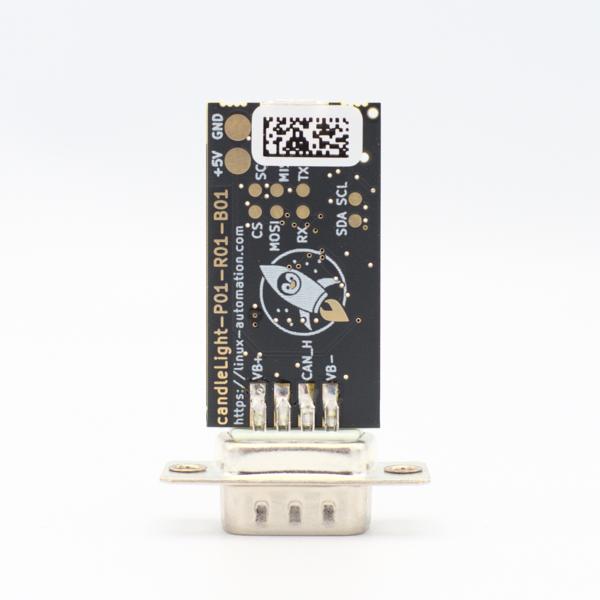
The candleLight is an open hardware USB-CAN adapter. At Pengutronix, we make use of Linux Automation’s variant, the candleLightFD, which is just one of the devices supported by the open candleLight firmware.
Our CAN expert Marc Kleine-Budde and hardware expert Jonas Martin have contributed 74 improvements to it since February. This includes build system improvements and cleanups but also support for new models and new hardware features such as multi-CAN boards.
Yocto/OpenEmbedded
At Pengutronix, we work quite a bit with Yocto BSPs, so it is no surprise we send patches to its build system OpenEmbedded every once in a while. This time it’s been resolving an issue where devtool would destroy git worktrees, support for OpenSSL config snippets, whitespace fixes, support for OpenSSL PKCS#11 providers (the non-deprecated OpenSSL extension API), and provider PEM files in signing.bbclass.
barebox
We’ve added about 200 changes to barebox and our maintainer Sascha Hauer released v2026.02 and v2026.03. These include new board support, better NFS handling, loading barebox proper as an ELF image and more.
A severe vulnerability was discovered in both barebox’ and U-Boot’s handling of signed FIT images. The hashed-nodes property of the signature node, which defines which nodes are subject to verification, was not itself covered by the signature. This allowed arbitrary untrusted images to be booted, effectively circumventing secure boot.
To address this issue, we have released v2026.03.1 and v2025.09.3. We are asking users relying on FIT images in their secure boot chain in U-Boot or barebox to update to fixed versions and have been working on coordinating with downstreams and customers to improve awareness and ensure timely mitigation.
You can find more details in the shared U-Boot/barebox advisory by our colleague Ahmad Fatoum.
PTXdist
PTXdist 2026.03.0 and 2026.04.0 have been released. Of the about 100 recent changes, about a third were contributed by the community.
Labgrid
16 pull requests were merged on our embedded testing system labgrid, enabling broader hardware support, improved stability, and new features.
RAUC
RAUC hasn’t seen any community contributions recently, but 57 commits introduced by us at Pengutronix. Besides plenty of smaller improvements and documentation, Jan Lübbe has provided major contributions towards the Update Server Concept. This introduces a preview of the update polling feature for a new, simpler automated way for RAUC-enabled embedded systems to stay up to date with an update server that may either serve updates statically, or employ server-side scripting to control which device to update under which conditions.
Wider Ecosystem
Not all Open Source contributions are code. Our colleague Jan Lübbe has discovered a wider-than-known impact of an OpenSSL vulnerability and disclosed his findings. Jonas Rebmann resolved some inconsistencies in systemd documentation.
Further Readings
Pengutronix Recent Open Source Contributions
Let's take the Linux 6.19 release as an occasion to look at the Open Source code we've contributed to various upstreams in the last three months.
Pengutronix Recent Open Source Efforts -
Linux 7.2 Edition
As another kernel version turns stable, we're once again looking back at two months of our efforts to improve Linux and its open source ecosystem.
Pengutronix Recent Open Source Contributions - Linux 7.1 Edition
A tour trough Pengutronix' contributions to Linux 7.1, and to other open source projects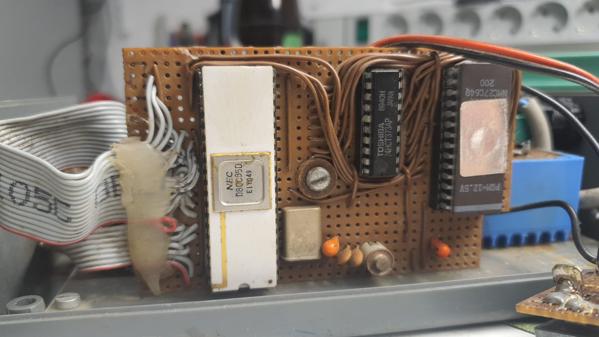
Managing Complexity with Open Source
A few days ago, something exciting happened: I revisited my very first embedded system - a 34 year old stepper motor controller, driving the telescope mount of the Public Observatory Rothwesten, which was built by me back when I was in class 12 in highschool. Comparing those embedded systems from back in the days with the recent industrial systems, it is impressive to see that the latter ones are not manageable any more without the use of open source software.

Pengutronix at the Linux Plumbers Conference
The Linux Plumbers Conference 2024 will take place in Vienna from 18. to 20.09.2024. Luckily this does not overlap with the ELCE. Pengutronix will attend the LPC with six colleagues - so watch out for our T-shirts and hoodies and and feel free to chat with us.

Pengutronix at FrOSCon 2024
On August 17th and 18th, 2024, it's that time again: FrOSCon will take place at the Bonn-Rhein-Sieg University of Applied Sciences in Sankt Augustin - and Pengutronix will be there again as a Partner.
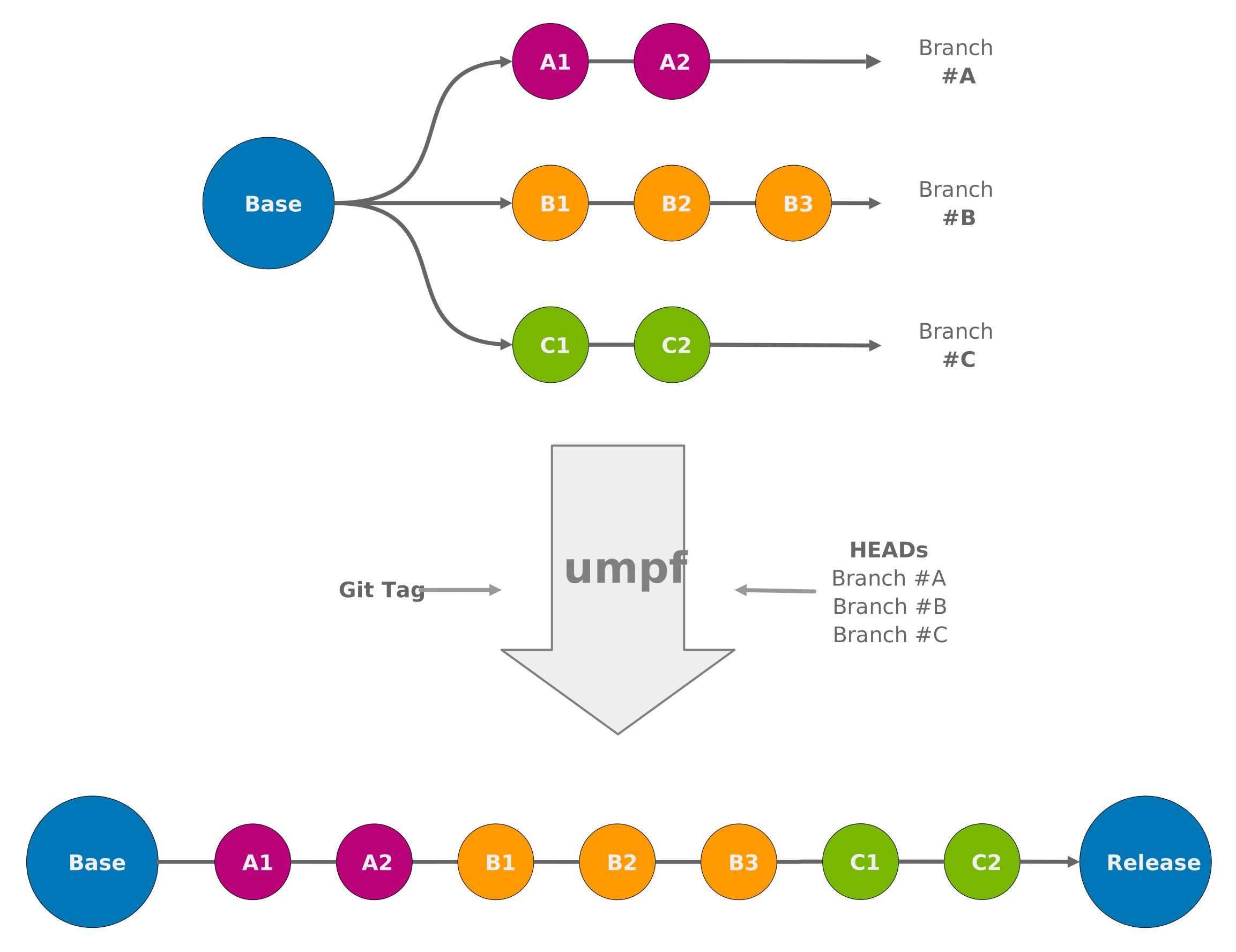
umpf - Git on a New Level
Modern software development is commonly accompanied by a version control system like Git in order to have changes to the source code being documented in a traceable manner. Furthermore, any version state should be easily reproducible at any time. However, for work on complex projects such as the BSP ("Board Support Package") of an embedded system with its multiple development aspects, the simple stacking of the individual changes on top of each other does not scale.
Pulse Width Modulation (PWM) is easy, isn't it? - Turning it off and on again
Part of Uwe Kleine-König's work at Pengutronix is to review PWM (Pulse Width Modulation) drivers. In addition, he also sometimes refactors existing drivers and the Linux kernel PWM subsystem in general.
Yes we CAN... add new features
Have you ever experienced an otherwise fine product that is missing just the one feature you need for your application?

Pengutronix at Embedded World 2022
Welcome to our booth at the Embedded World 2022 in Nürnberg!